Artigos, papers e trabalhos completos publicados em Revistas e eventos acadêmicos
Para acessar na íntegra, clicar no título.
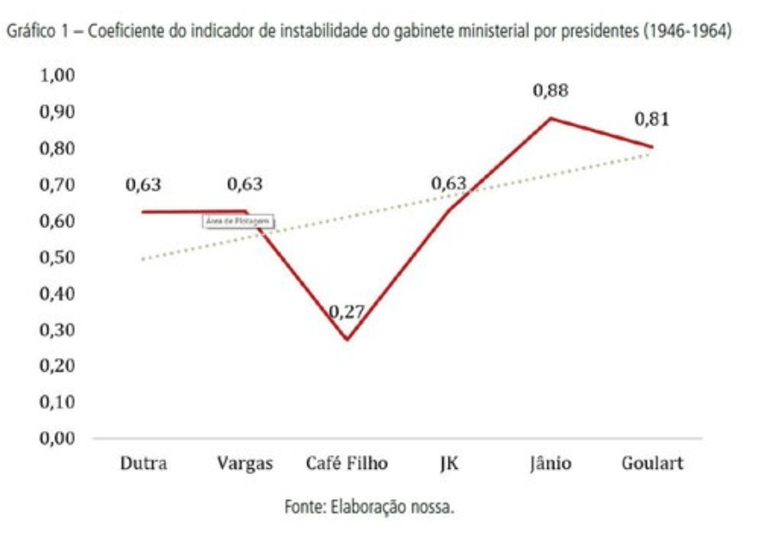
Artigo publicado em EstudosHistóricos, de autoria de Adriano Codato, Paulo Franz, Amanda Sangalli e Rodrigo Silva
Measuring and Explaining the Instability of Presidential Cabinets in Brazil between 1946 and 1964. We measured the instability of the Executive branch in Brazil by examining ministerial turnover rates. We designed a model with twelve covariates to determine their impact on minister dismissals and, therefore, on the political instability across different administrations between 1946 and 1964. These variables referred to ministerial profiles, institutional and situational factors, spanning both political and economic dimensions. Our findings, obtained by employing the Cox proportional hazards model, revealed two pivotal factors in explaining the political configuration during this timeframe: a rise in the effective number of parties in the Chamber of Deputies and consistent fluctuations in the number of parties represented in the ministerial cabinet, driven by the necessity to accommodate allies. Political variables associated with regime consolidation, such as the age of democracy, or economic variables, such as the increases in GDP and the decline in inflation rates, were not significant.


Artigo publicado em Tempo Social, de autoria de Maria Rita Loureiro, Adriano Codato, Rafael Rodrigues Viegas e Rodrigo Silva
The University of São Paulo (USP) is acknowledged for its scientific and cultural significance. This article investigates the extent of USP’s influence on the shaping of Brazil’s governing elites. The study is founded on a quantitative analysis of the academic background of individuals occupying top positions in the federal public administration (Presidents of the Republic, Presidents of the Central Bank, Ministers of State, leaders of the Legislative, Judiciary, and the Public Prosecutor Service) from the 1930's to the present day. The data reveals that USP has made a significant contribution to the education of high-ranking federal members across various spheres, with its influence being predominant. The participation of USP alumni varies over time and between different political regimes, being more pronounced during democratic periods. Moreover, other higher education institutions have also played crucial roles in the formation of governing elites. The diversity of institutions attended by government members reflects the complexity and dynamics of the formation of Brazilian elites, influenced by political and social changes over time.
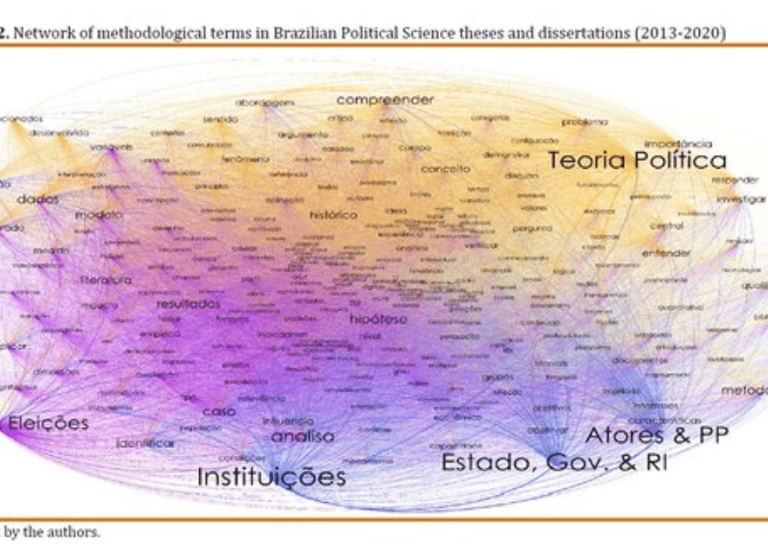
This study delves into the thematic and methodological configuration of Brazilian Political Science. Through the study of the relational dynamics between different research agendas and their specific approaches, we identified the centrality of certain themes and the methodological density within Brazilian Political Science. We conducted an analysis of 1,849 PhD theses and Master dissertations completed between 2013 and 2020 in eleven Postgraduate Programs. Our examination encompassed titles, abstracts, and keywords in these works, with data sourced from the CAPES theses and dissertations Catalog. The thematic network showed the emancipation of this academic field, revealing the consolidation of five distinct thematic communities. These communities encompass the major canonical themes of mainstream Political Science: 01. political theory, 02. State, government, and international relations, 03. social actors, participation, and public policies, 04. political institutions and State powers, and 05. parties, elections, and legislative studies. The methodological network revealed a semantic structure that mirrors this thematic division, with each community exhibiting unique styles, research methods, and investigative techniques. These findings are in line with assessments emphasizing the institutionalization of Brazilian Political Science. This institutionalization is manifested in the predominance of research themes intricately linked to politics (and not to the economy, society, etc.) and greater methodological refinement.
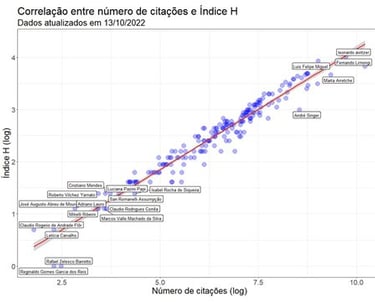
A pesquisa é um trabalho em curso com dados ainda muito preliminares. O objetivo é entender, a partir de um critério quantitativo, as hierarquias que se formam em um determinado espaço científico. A partir da replicação dos procedimentos do artigo de Kim e Grofman 2019 (The Political Science 400: With Citation Counts by Cohort, Gender, and Subfield), mensuramos o número de citações no Google Scholar dos sujeitos da pesquisa (docentes nos Programas de CP, RI, PP, Defesa no Brasil. N = 195). Os dados foram coletados de modo automatizado através de uma rotina em R que permitiu a raspagem automática das informações do Google Scholar de três indicadores: total de citações; h índice; i10. Os dados foram agrupados por Programas de pós graduação e por indivíduos. Nesse caso, o atributo analisado até o momento foi o gênero do(as) pesquisadores(as). Considerando o Índice h: não há diferença significativa entre o impacto científico de homens e mulheres, apesar da ligeira vantagem dos homens. Quanto maior a nota CAPES do Programa de pós-graduação, mais há pesquisadores(as) de destaque, o que sugere uma coerência entre duas escalas diferentes de prestígio, institucional e individual (CAPES e N de citações).
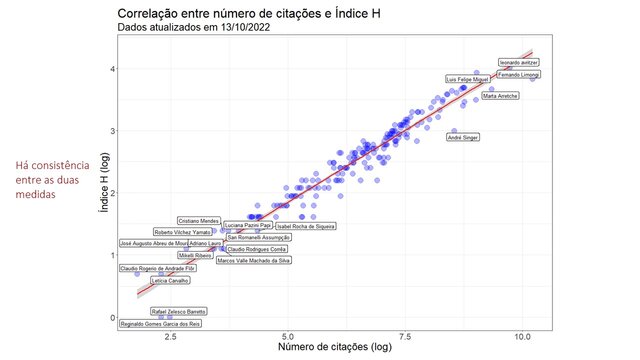
Trabalho publicado no 46˚ Encontro anual da ANPOCS: MR08. Circulação e impacto nas ciências sociais contemporâneas, Campinas - SP, de autoria de Adriano Codato, Dalson Figueired, Gabryela Gabriel, Nilton Sainz e Rodrigo Silva
The article examines the transformations that occurred in the Journal of Sociology and Politics between 2021 and 2023, in response to financial challenges, notably during the public science funding crisis under the Bolsonaro government (2019-2022). The establishment of the Institute for Scientific Communication (IpeCC), a non-profit entity, marked a significant milestone, taking over the management of the journal and diversifying its funding sources. Additionally, the restructuring of the Editorial Committee and the appointment of a full-time Executive Secretary significantly improved the journal's management and editorial processes. This period was also characterized by a notable reduction in the manuscript review and publication time, reflecting increased efficiency in editorial processes. This improvement is crucial in enhancing the journal's impact and relevance in the academic community, with transparency in these procedures being highlighted as essential for authors, editors, and reviewers.
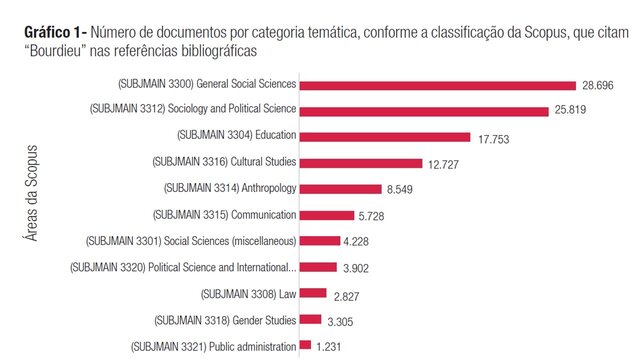
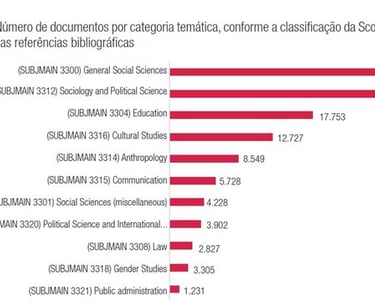
Pierre Bourdieu has a firmly established reputation within the social sciences, particularly in the field of Sociology. But how has Bourdieu been received in the field of Political Science? If we look at the most important journals in the area, citations to his books are practically non-existent. On the other hand, many researches devoted to the field of power in France, Brazil, Argentina, Chile, etc., have been inspired by Bourdieu’s Sociology of political life. This article explores the author’s presence and influence on political science publications outside of mainstream journals. Stemming from an extensive database of 25,475 documents indexed in the Scopus database that mention Pierre Bourdieu in the bibliographic references, we analyzed 355 articles that used his key concepts for political analysis, such as political field, State, and symbolic power. We found that even when Bourdieu’s writings are cited, the works referenced are not connected to his sociology of politics. A contextual analysis of the 20 most cited articles of these 355 documents revealed that references to Bourdieu were mostly positive. Furthermore, acknowledgments of the author’s authority were more common than corroborative arguments based on his theory. The influence of Bourdieu’s ideas on the works analyzed was superficial in 17 of the 20 cases.